What the Teeth Whitening Service Covers
Most people who consider Teeth Whitening arrive with the same three quiet questions. Will it hurt? Is it safe? Does it actually work? Those questions deserve straight answers rather than marketing language, and the service described on this page is built around answering them properly before anything else happens. Teeth Whitening is not a single product applied in a single moment. It is a short sequence of steps — assessment, preparation, controlled treatment, and structured aftercare — and each of those steps exists to protect a different part of the outcome.
The service begins with an assessment rather than a sales conversation. A trained professional looks at the condition of the enamel, the health of the gums, the type of discolouration present, and any existing dental work such as fillings, crowns, veneers or bridges. That assessment determines whether Teeth Whitening is appropriate at all, which approach suits the individual, and what a realistic outcome looks like. It is the single most important part of the service, because everything that follows depends on the accuracy of that first judgement.
From there, the treatment itself is deliberately straightforward. There is no complicated home routine to remember, no series of daily applications to keep track of, and no long build-up period during which you wonder whether anything is working. The appointment takes approximately one hour. You arrive, the soft tissues of the mouth are protected, the whitening agent is applied under supervision, and the session is monitored from start to finish. Most people notice a visible difference by the time the session ends.
The final stage is aftercare, and it is not an afterthought. In the days immediately following a session, enamel is temporarily more porous and therefore more receptive to staining. A short, clearly explained aftercare period protects the result during that window. Beyond it, a small number of ordinary daily habits determine how long the result lasts. The service includes guidance on both, because a result that fades within weeks because nobody explained the first forty-eight hours is not a result worth delivering.
Taken together, these four elements — assessment, preparation, treatment, and aftercare — form a service rather than a transaction. What follows sets out each part in detail, alongside the reasons people most often give for choosing this approach to Teeth Whitening over the alternatives available to them.
Twelve Reasons People Choose This Teeth Whitening Service
The reasons below are the ones people actually give, in their own words, when asked why they chose a supervised Teeth Whitening session rather than a shop-bought kit or no treatment at all. None of them are dramatic. Collectively, they describe a service that is easy to say yes to.
1. You See Results Straight Away
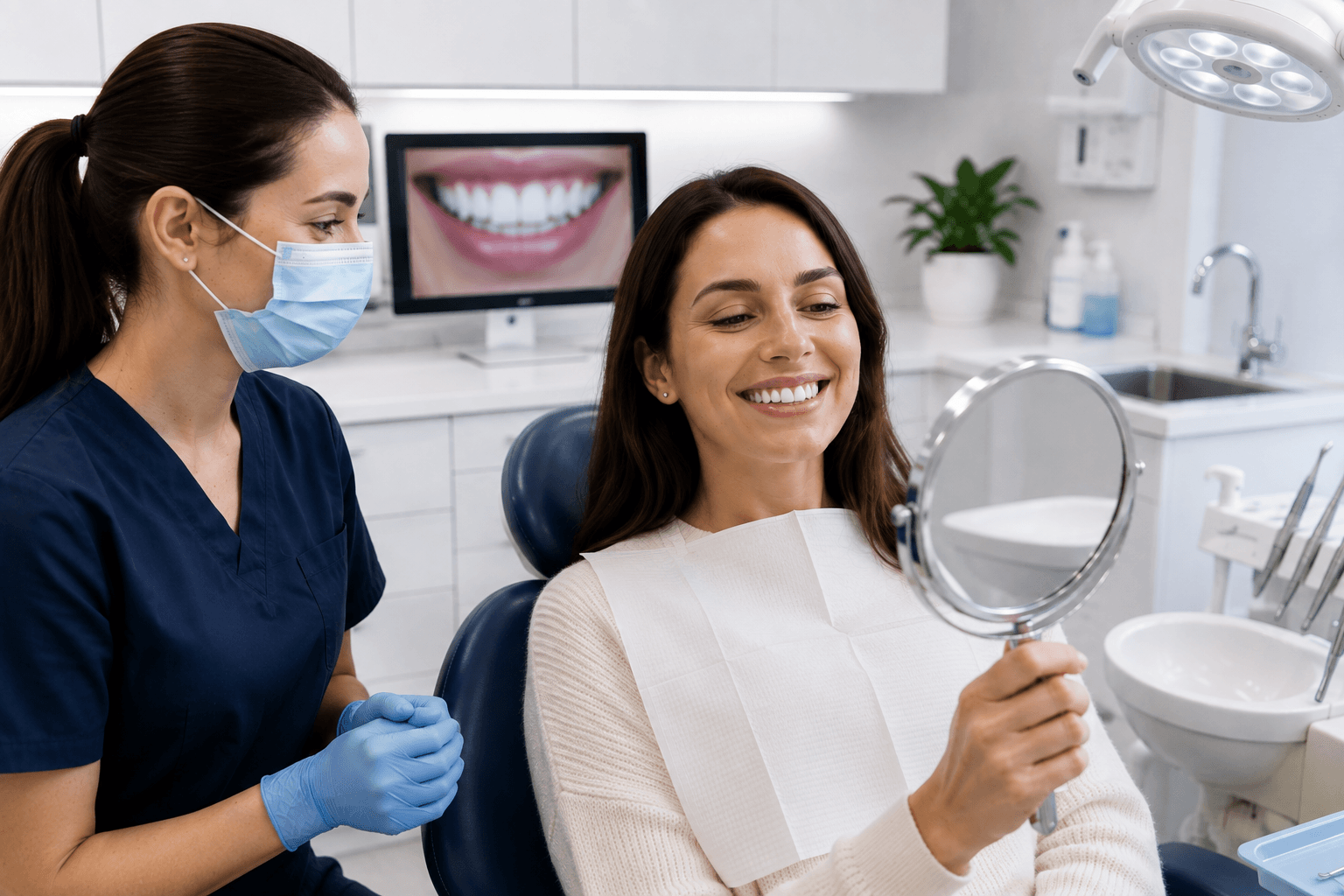
This is consistently the first reason people mention. There is no waiting period, no gradual accumulation over a fortnight, and no uncertainty about whether the product is doing anything at all. The session takes about an hour, and the change is usually visible when you look in the mirror afterwards. For anyone who has previously bought a whitening product, used it conscientiously for two weeks, and then struggled to tell whether anything had happened, the immediacy of a supervised session is a genuine relief.
That immediacy also makes the treatment easy to plan around. If something is coming up — a wedding, a photograph, a first day in a new role — you can book a single appointment rather than starting a regimen weeks in advance and hoping it produces something in time.
2. A Gentler Formulation Without Harsh Chemicals
Many whitening procedures rely on peroxide, which is powerful and, for a proportion of people, irritating to the gums and soft tissues. A peroxide-free approach exists precisely for those who have avoided whitening in the past because they judged it too harsh for their teeth or their gums. The active chemistry lifts staining without the aggressive oxidative load that some people react to.
If a previous experience with whitening left you with sore gums, an uncomfortable tingling sensation, or simply an uneasy feeling about what had been applied to your mouth, this is often the difference that makes a second attempt worth considering.
3. No “Zingers” or Sharp Sensitivity
Anyone who has whitened before will recognise the term. A “zinger” is the sudden, sharp, electrical sensation that shoots through a tooth without warning during or after treatment. It is unpleasant, unpredictable, and the single most common reason people abandon whitening part-way through.
Most people who choose this Teeth Whitening service do not experience it. The formulation, the concentration, and the controlled exposure time are all chosen with comfort in mind, and the session is supervised throughout so that any discomfort can be addressed immediately rather than endured. The intention is that you can sit back and relax for the hour rather than bracing yourself.
4. It Is Kind to Your Teeth
A brighter smile should not come at the cost of dental health, and any approach that trades one for the other is a poor bargain. The emphasis here is on lifting stains gently rather than bleaching teeth aggressively. Enamel is finite and does not regenerate, so protecting it is not an optional extra — it is the constraint within which everything else has to work.
In practice that means appropriate concentrations, controlled exposure times, protection of the gum margin, and a willingness to stop or adjust rather than push for an extra shade.
5. Carried Out by Trained Professionals
At-home kits are inconsistent. Sometimes they work a little, sometimes not at all, and it is remarkably easy to apply them unevenly — leaving patches, missing the back teeth entirely, or allowing gel to sit against the gum line for far longer than intended. A generic tray does not match your teeth, and nobody is watching to correct the application.
With a supervised session, the application is even, the process is controlled, and the guesswork is removed. You turn up, sit down, and let someone who does this every day handle it. The three practical benefits are a more even result, a safer process, and no need to interpret ambiguous instructions on the back of a box.
For people looking for a professionally guided Teeth Whitening service in another area, Ultimawhite Barnsley provides further information about locally available Teeth Whitening services.
6. The Difference It Makes to Confidence
This is the benefit people least expect and most often mention afterwards. Discoloured teeth change behaviour in small, cumulative ways. People learn to smile with their mouth closed. They angle away from cameras. They cover their mouth when they laugh. They become slightly more guarded in conversation without ever consciously deciding to.
When the appearance improves, those habits tend to unwind on their own. You smile more readily, you stop managing your expression in photographs, and you think about your teeth less often. It is a small change that has a disproportionate effect on how comfortable you feel day to day.
7. It Tackles Everyday Staining
Life happens, and so does staining. Coffee, tea, smoking, red wine, richly coloured sauces, and the simple passage of time all deposit pigment on and within the enamel surface. This is ordinary, universal, and not a reflection of poor hygiene — most heavily stained teeth belong to people who brush conscientiously twice a day.
Teeth Whitening reduces those visible stains and brings the smile back towards its natural brightness without producing an artificial, obviously-treated appearance. The goal is a smile that looks like yours on a good day, not one that looks like it belongs to someone else.
8. The Whole Process Is Easy
There is no complicated routine, no trays to wear at home night after night, and nothing to remember daily for a fortnight. You turn up to your appointment, sit comfortably, and let the treatment do its work. Within about an hour you are finished and free to get on with your day.
9. It Works Well Before Big Moments
A significant proportion of appointments are booked shortly before something that matters — weddings, holidays, job interviews, parties, milestone birthdays, reunions, and family photographs. The appeal is obvious: a short, self-contained appointment that gives you a noticeable lift without a long commitment or an extended preparation period.
10. Results That Last, With a Little Care
The result is not a one-day effect. With normal care — brushing, flossing, and some awareness of staining foods and drinks — the improvement holds for a considerable period. Longevity varies because it depends more on habits than on the treatment itself.
Someone who drinks four black coffees a day and smokes will see the result fade faster than someone who does neither. When a refresh is eventually wanted, a top-up session is always available.
11. Suitable for Most People
You do not need to be a textbook candidate to benefit. If your teeth look somewhat dull, yellowed, or generally stained, there is a good chance that Teeth Whitening will visibly improve their appearance. Most adults with healthy teeth and gums fall comfortably into this category.
A short consultation confirms what is appropriate in your case, and will say honestly if whitening is unlikely to achieve what you have in mind.
12. A Simple, Reliable Choice
Ultimately, people choose this approach because it is easy, safe, and does what it says it will do. There are no overpromises, no complicated multi-stage protocols, and no attempt to convert a straightforward cosmetic treatment into a long-term programme. It is a direct way to get a brighter smile without the downsides people reasonably worry about.
The Pre-Treatment Consultation
Every Teeth Whitening appointment begins with a consultation, and it is not a formality. The purpose is to establish three things: whether whitening is appropriate for you right now, which approach will suit your teeth, and what result you can realistically expect. Skipping this step is how people end up disappointed, uncomfortable, or both.
What Is Assessed
The condition of the enamel is examined first. Thin, worn or eroded enamel behaves differently from healthy enamel, both in how it responds to whitening and in how likely it is to produce sensitivity. Areas of exposed dentine near the gum line are noted, as these are the most common source of discomfort during any whitening procedure.
Gum health is reviewed next. Inflamed, receding, or bleeding gums are a reason to postpone rather than proceed, because whitening agents in contact with compromised soft tissue are considerably more likely to cause irritation. If gum disease is present, it should be addressed by a dental professional before any cosmetic treatment is considered.
Existing dental work is identified and mapped. Crowns, veneers, bridges, and composite fillings are made from materials that do not lighten in response to whitening agents. Natural enamel around them will change; they will not. Where restorations sit in the visible smile line, this needs to be discussed openly before treatment, not discovered afterwards.
Finally, the type of discolouration is categorised. Extrinsic staining sits on the outer enamel surface and responds well. Intrinsic discolouration originates within the tooth structure — from ageing, certain medications, developmental fluoride exposure, or previous trauma — and is more resistant. Knowing which you have is the single strongest predictor of the outcome.
What You Will Be Asked
You will be asked about previous whitening attempts and how your teeth responded, since a history of severe sensitivity changes the approach. You will be asked about any current dental treatment in progress or planned, because whitening is best sequenced correctly relative to restorative work. You will be asked about medical history where it is relevant, and about pregnancy or breastfeeding, where the standard professional position is precautionary postponement.
Recording the Starting Point
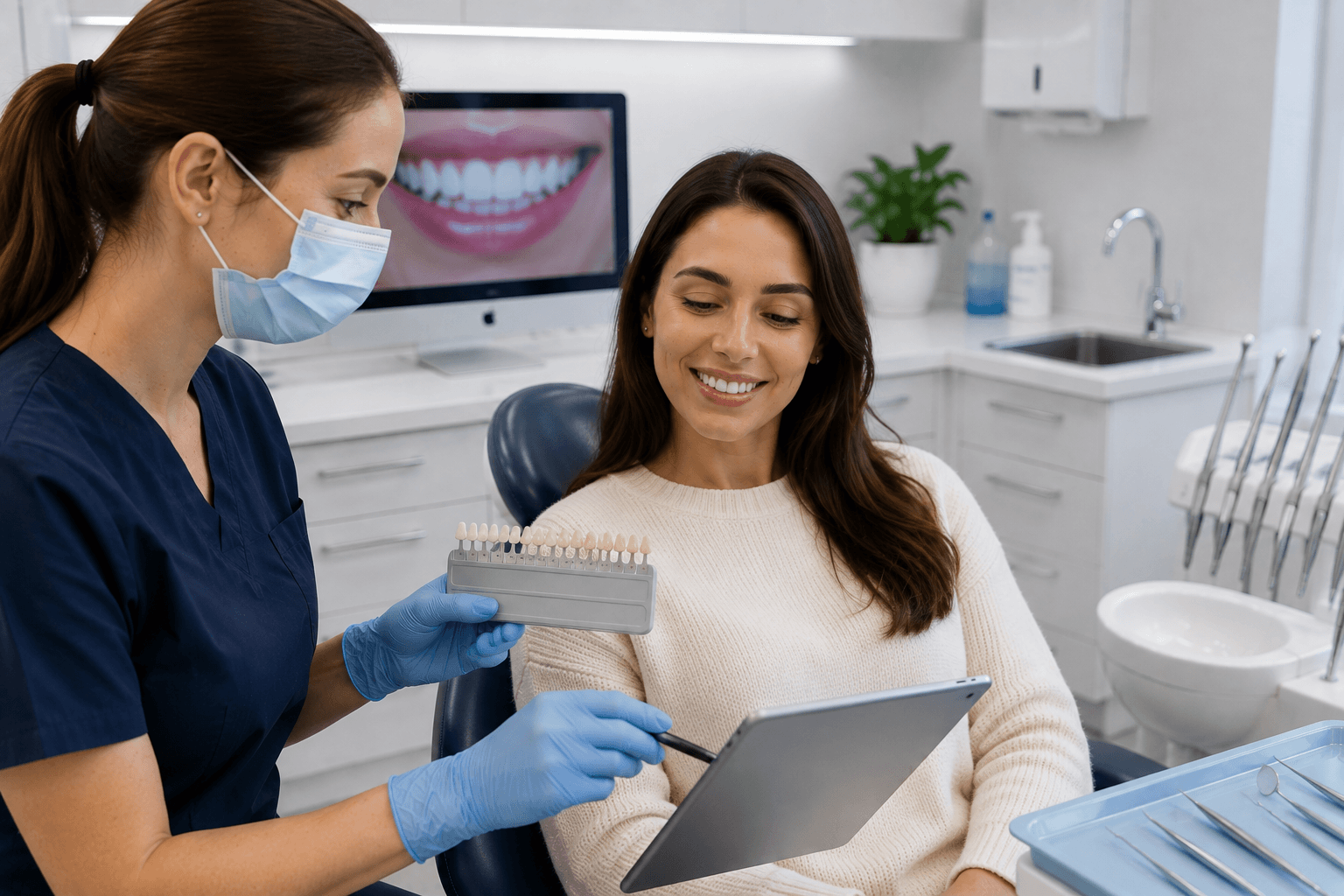
Before treatment begins, the starting shade is recorded — typically against a professional shade guide, and often with a baseline photograph. This gives an objective reference rather than relying on memory, which is unreliable in exactly this situation. People adapt quickly to a new appearance and frequently underestimate the change after a few days. A recorded baseline settles the question.
Inside the Appointment, Step by Step
The session itself is short and undramatic. Knowing the sequence in advance removes most of the apprehension people bring with them. From preparation and soft-tissue protection through to application, monitoring and the final shade review, each stage has a clear purpose. If you would like to understand more about the approach used and how the service is structured, you can also read about the Ultima White Teeth Whitening approach before arranging your treatment.
Arrival and Preparation
The session opens with a brief review of the consultation findings and confirmation that nothing has changed — no new sensitivity, no recent dental work, no discomfort that was not present before. The teeth surface is then cleaned so that the whitening agent contacts enamel directly rather than a film of plaque or surface debris, which would produce an uneven result.
Protecting the Soft Tissues
Before any gel is applied, the gums, lips and cheeks are isolated and protected. This is one of the clearest practical differences between a supervised session and a home kit. Protective barriers keep the whitening agent on the teeth and away from soft tissue, which is where the overwhelming majority of whitening-related irritation originates. It takes a few minutes and prevents most of what people fear.
Application and Activation
The whitening agent is applied evenly across the visible surfaces of the teeth. Even application matters: patchy coverage produces patchy results, and the back of the smile line is the area most commonly missed by people treating themselves. Where light activation is part of the protocol, it is applied under supervision for a controlled period rather than for as long as possible.
Monitoring Through the Session
Throughout the appointment, comfort is checked and the response of the teeth and soft tissues is observed. This is the part that cannot be replicated at home. If any discomfort develops, exposure can be shortened, the application can be adjusted, or the session can be paused. Nothing about the process requires you to endure something unpleasant in the hope that it will be worth it.
Finishing and Reviewing
At the end of the session the whitening agent and protective barriers are removed, the mouth is rinsed, and the result is compared against the recorded starting shade. Aftercare is explained in full at this point, while it is immediately relevant — not handed over as a leaflet to read later. You will leave knowing exactly what to eat and drink for the next two days and why it matters.
Aftercare: The First 24 to 48 Hours
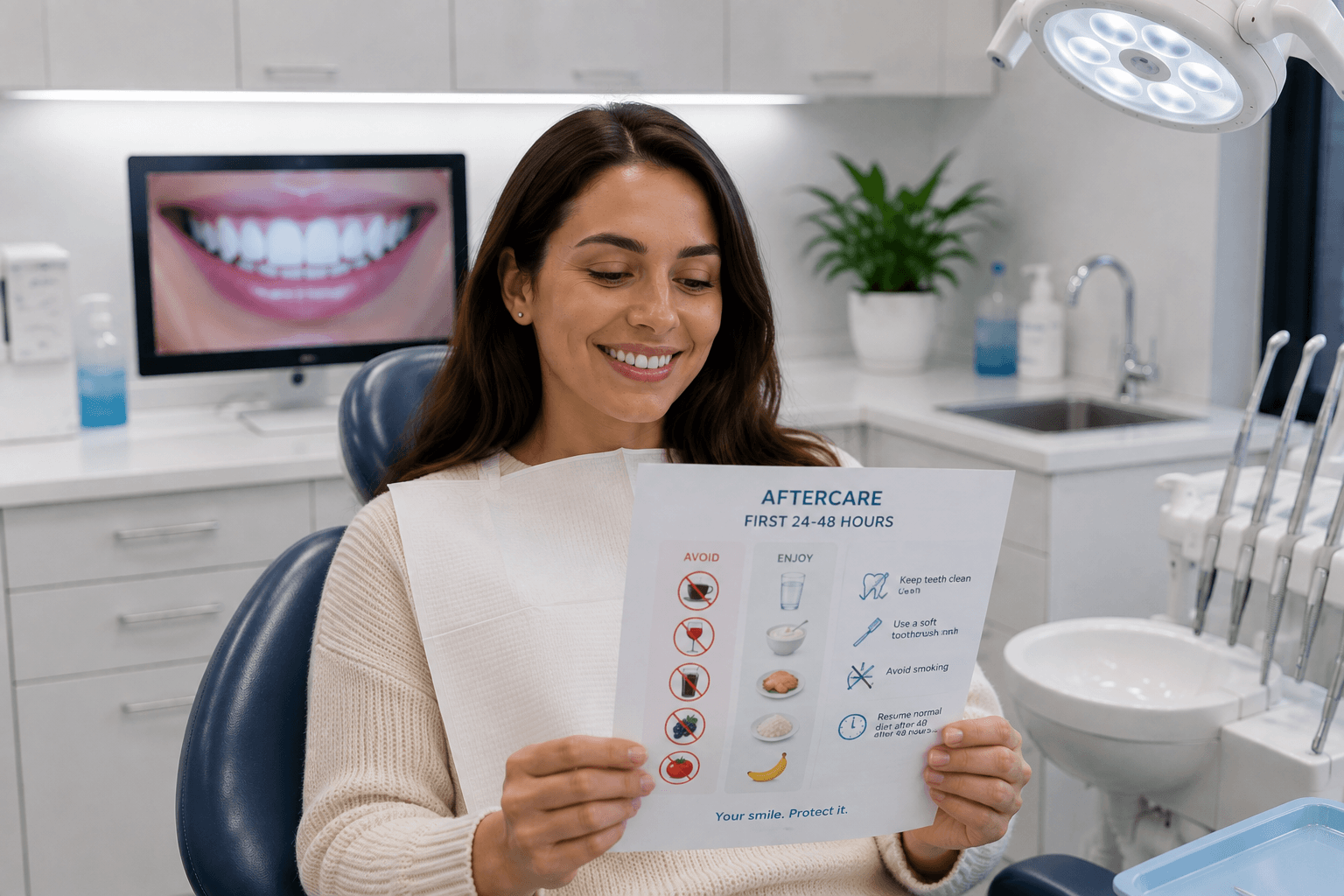
Teeth Whitening is not a one-time treatment that ends when you leave. It is the beginning of a maintained result, and the first two days do more to determine longevity than anything else you will do. For a short period after a session, enamel is slightly more porous than usual. That temporary porosity is what makes the treatment effective, and it is also what makes newly whitened teeth unusually receptive to pigment.
The practical response is a short “white diet” — a two-day window in which you avoid anything strongly coloured. It is a small inconvenience that protects a result you have paid for and waited for, and almost everyone finds it manageable once the reason is explained.
What to Avoid
- Coffee and tea, including green tea, which stains more than its colour suggests
- Red wine
- Fizzy drinks, particularly dark colas
- Curry, soy sauce, and tomato-based sauces
- Berries, beetroot, and brightly coloured sweets
- Tobacco in any form, which is the single most aggressive stainer on this list
What to Choose Instead
- Water — the best possible option throughout this period
- Milk and plain yoghurt
- Plain chicken, rice and pasta
- White fish
- Potatoes, bread, and other pale carbohydrates
- Cauliflower, white cheese, egg whites, and peeled apples or pears
The Simplest Rule to Remember
If it would stain a white shirt, it will stain your teeth. That single test covers almost every decision you will face over the two days, and it is far easier to apply in a café or a supermarket than a memorised list. When you are uncertain, the shirt test answers the question.
Managing Any Short-Term Sensitivity
Some people experience mild sensitivity in the first day or two. It is usually temporary and settles on its own as the teeth rehydrate. A desensitising toothpaste formulated for sensitive teeth reduces the discomfort noticeably. Brush gently with a soft-bristled brush, and avoid extremes of temperature — very hot drinks and iced beverages both provoke sensitivity more than room-temperature ones. If discomfort persists beyond a few days or is severe rather than mild, it should be reported to a dental professional rather than tolerated.
What Good Aftercare Achieves
Following the routine properly maintains the result for longer, prevents fresh staining from establishing during the vulnerable window, and reduces any sensitivity that does occur. The effort required is concentrated almost entirely in the first forty-eight hours.
Daily Habits That Maintain Your Result
Beyond the initial window, maintaining a Teeth Whitening result requires nothing complicated. It requires consistency in four ordinary habits, none of which take meaningful extra time.
Brush Properly, Twice a Day
Use a soft-bristled toothbrush and brush for a full two minutes. This removes surface stains before they have time to set into the enamel. Two minutes is longer than most people think — the majority stop at around forty-five seconds.
Floss Daily
Flossing clears plaque and food debris from between the teeth, where a toothbrush cannot reach. These interdental areas darken first and are highly visible when you smile, so neglecting them undermines an otherwise good result.
Stay Hydrated
Drinking water throughout the day rinses away pigments before they settle and keeps the mouth clean and fresh. It also supports saliva flow, which is the mouth's own natural defence against staining and decay.
Rinse After Eating or Drinking
If you cannot brush, simply rinsing with water after a coffee or a glass of red wine measurably reduces staining. It takes seconds and is the highest-value habit on this list relative to the effort involved.
Longer-Term Moderation Rather Than Avoidance
Beyond the initial aftercare window, the goal is moderation rather than permanent abstinence. Nobody is expected to give up coffee indefinitely. Small behavioural adjustments make a disproportionate difference: drinking staining beverages through a straw where practical, following them with water, and not sipping a single coffee slowly over two hours all reduce total contact time between pigment and enamel.
Smoking deserves separate mention because its effect is not comparable to dietary staining. Nicotine and tar adhere to enamel and build up persistently rather than washing away. People who smoke will see whitening results fade considerably faster and will need maintenance more frequently. Reducing or stopping benefits the appearance of the teeth and a great deal else besides.
Top-Up and Refresh Appointments
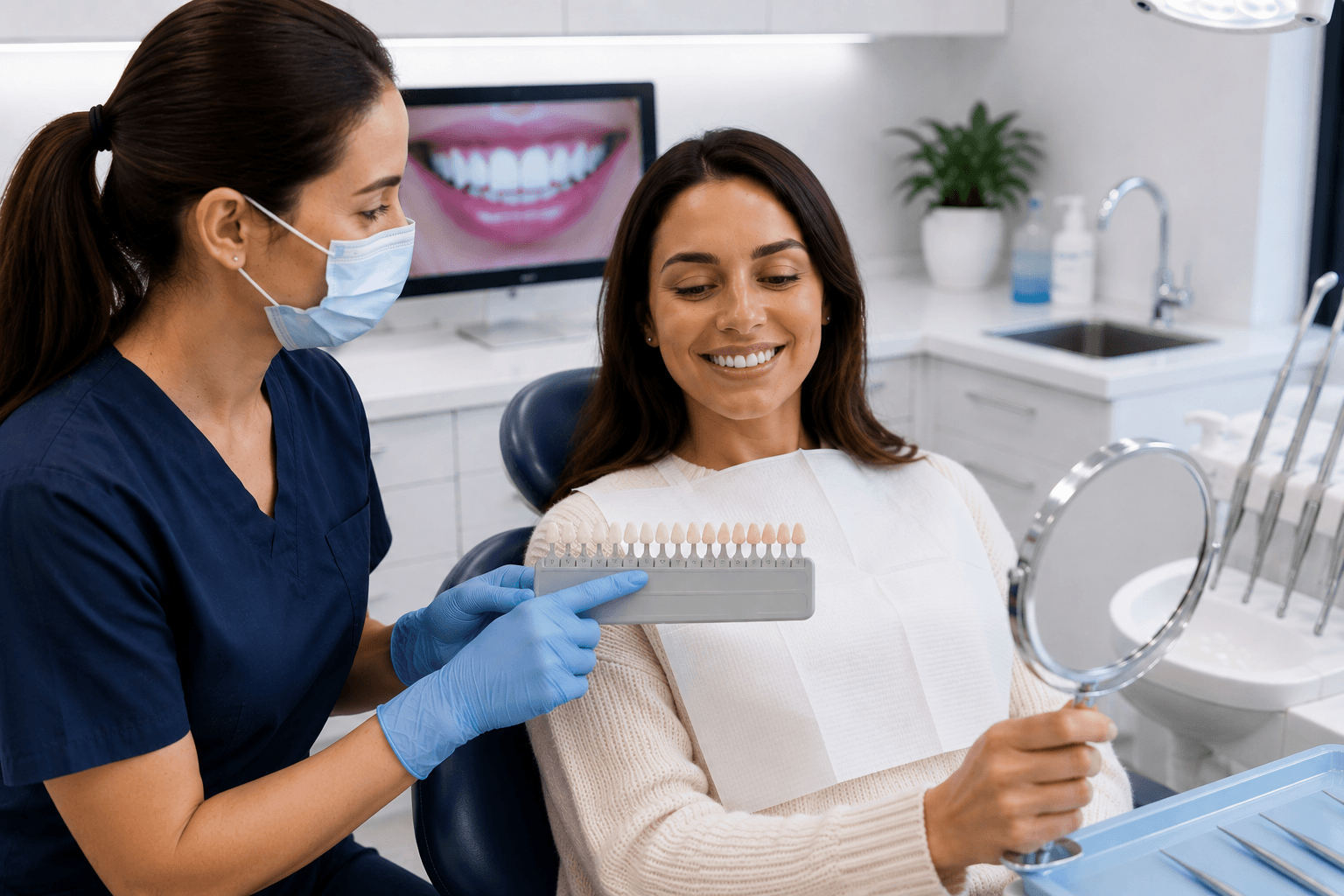
Whitening results are not permanent, and any service that suggests otherwise is not being straight with you. Teeth continue to encounter pigment every day, and enamel continues to age. A top-up appointment restores brightness when it has drifted, and it is a normal, expected part of maintaining a whitened smile rather than a sign that the original treatment failed.
The interval between top-ups varies substantially between individuals because it is driven by habits rather than by the treatment. Someone with a low-staining diet who does not smoke may go a long time before wanting a refresh. Someone who drinks several cups of tea a day, enjoys red wine regularly, or smokes will notice drift sooner. Neither is unusual, and neither requires justification.
Top-up sessions are generally simpler than a first appointment. The assessment is quicker because the baseline is already known, the response of your teeth to whitening has already been observed, and any sensitivity pattern is already documented. The aftercare requirement is identical: the same two-day white diet applies, for the same reason.
A sensible approach is to book a refresh when you notice the change yourself rather than on a fixed calendar schedule.
Who the Service Suits, and Who Should Wait
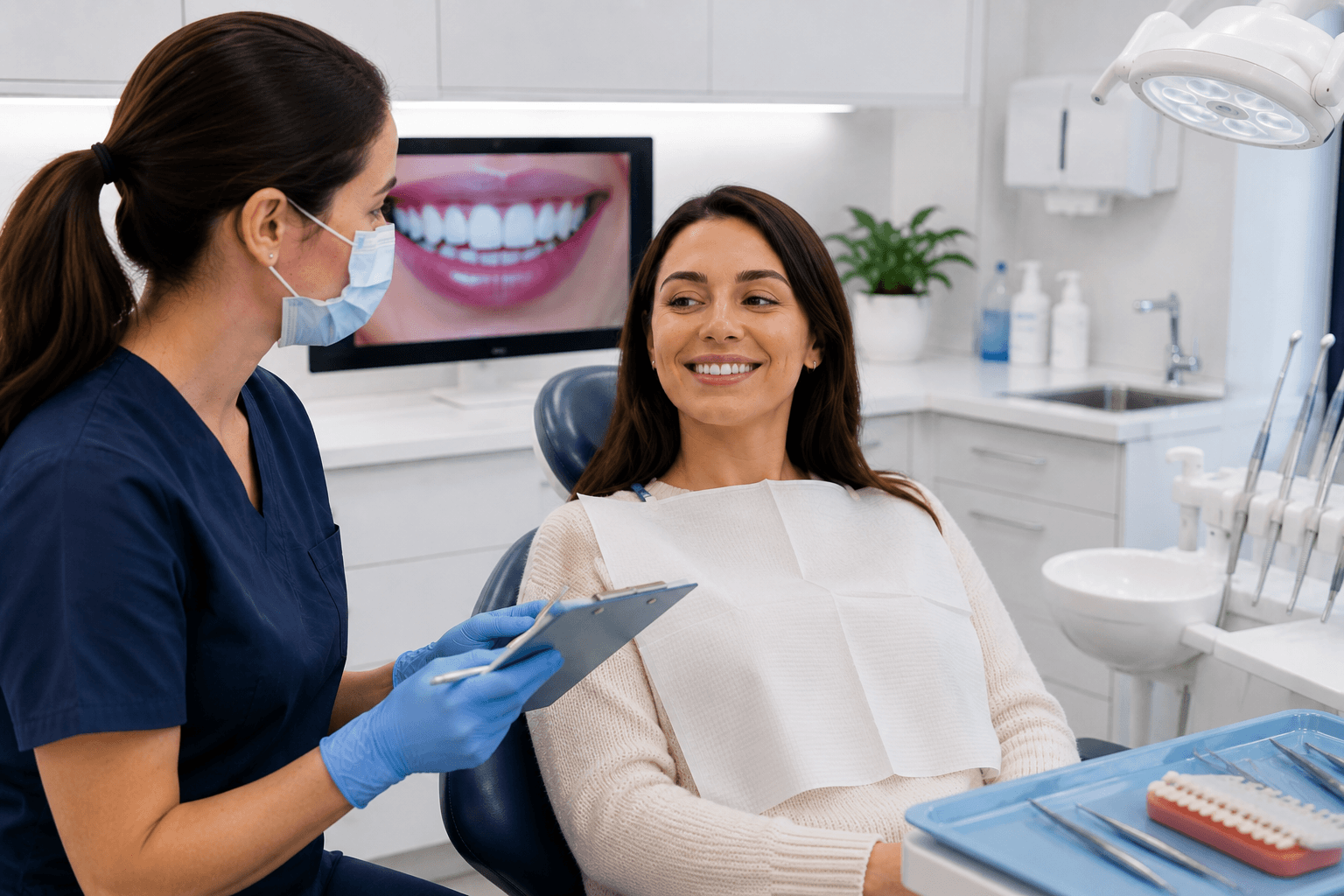
Being honest about who should not proceed is as much a part of a responsible service as delivering treatment to those who should. The following is a general guide; individual suitability is confirmed at consultation.
Generally Well Suited
- Adults with healthy, intact natural teeth and no active decay
- Those whose discolouration is extrinsic — from coffee, tea, red wine, coloured sauces or tobacco
- Those whose teeth have gradually dulled with age rather than through a specific event
- Those with healthy gums and no untreated periodontal disease
- Those who understand that whitening enhances a natural shade rather than replacing it
- Those willing to follow the short aftercare period
Reasons to Postpone or Reconsider
- Active tooth decay or untreated gum disease — these should be resolved first
- Significant enamel erosion or extensive exposed dentine
- Recent dental surgery or a restoration that has not yet settled
- Pregnancy or breastfeeding, where the standard professional position is precautionary postponement
- Adolescents whose teeth are still developing, where larger pulp chambers and thinner enamel warrant caution
- Expectations that whitening cannot meet — for example, matching a heavily edited photograph
The Restoration Question
People with crowns, veneers, bridges or large composite fillings in the visible smile line are not excluded, but they do need a conversation before treatment. Those materials will not change colour. If the natural teeth around them lighten, the contrast becomes more noticeable rather than less. In some cases the sensible sequence is to whiten first and then match new restorations to the achieved shade; in others, an alternative cosmetic approach may deliver a more uniform result. Either way, this should be decided in advance.
Comfort and Sensitivity Management
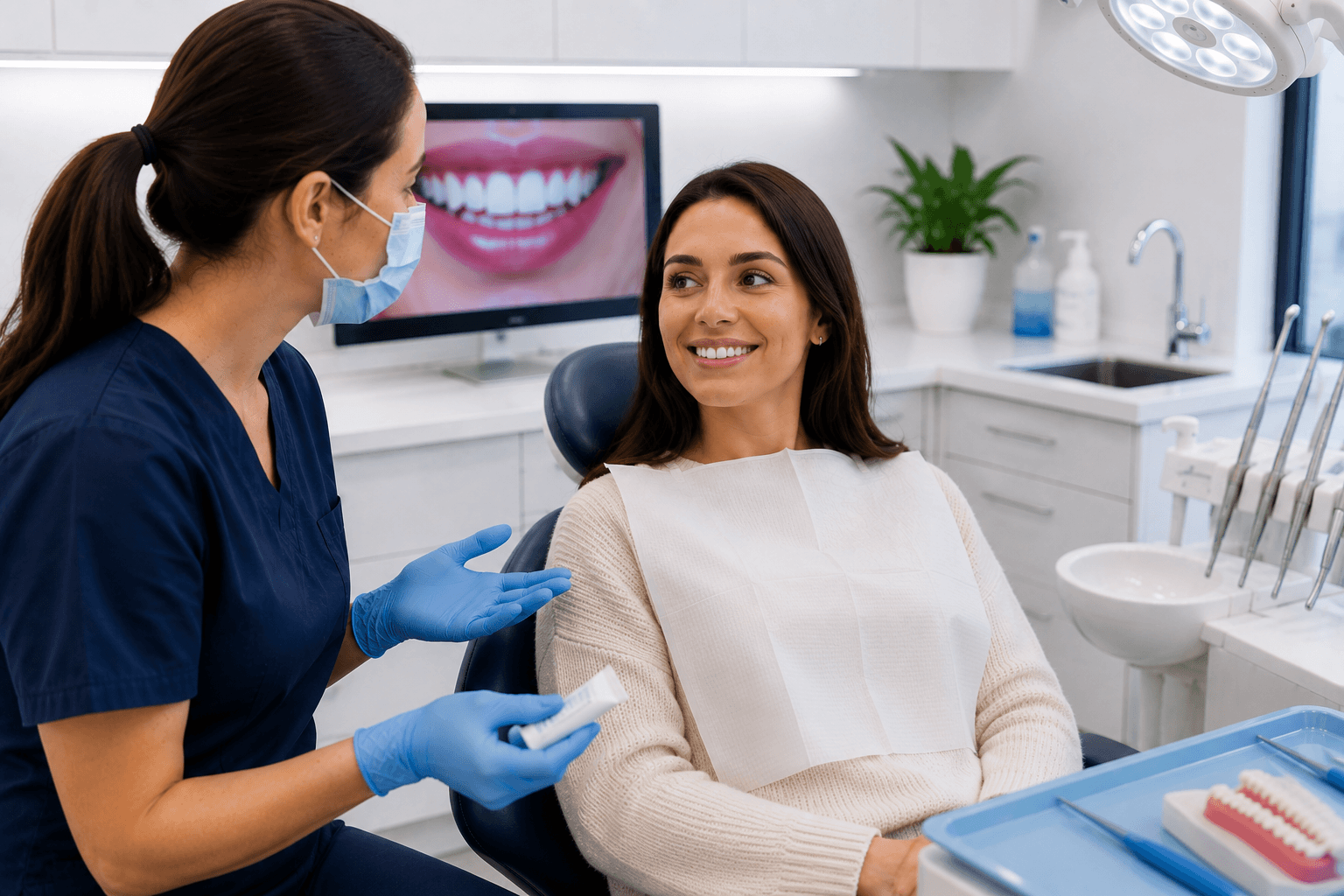
Sensitivity is the concern raised most often, and it deserves a direct answer rather than reassurance. Some people experience mild, temporary sensitivity during or after Teeth Whitening. Most do not. Severe pain is uncommon and is not something to accept as part of the process.
Where sensitivity is anticipated — because of a previous experience, thin enamel, exposed dentine, or receding gums — the approach is adjusted before treatment rather than after. Options include a desensitising preparation used in advance of the session, a reduced exposure time, a lower-concentration formulation, or spacing treatment across more than one visit rather than pushing for the full change in a single sitting.
During the session, comfort is checked rather than assumed. Being supervised means you can say something the moment anything feels wrong, and the response is immediate. This is genuinely different from a home kit, where the only available options are to continue or to stop entirely, with no middle ground and nobody to ask.
Sensitivity that intensifies, persists beyond a few days, or is localised sharply to a single tooth is a reason to seek dental advice, because it may indicate something unrelated to whitening that was present beforehand.
Standards, Safety and Record-Keeping
A Teeth Whitening service is only as good as the standards behind it, and standards are largely invisible to the person receiving treatment. They are set out here so that you know what to expect and what to ask about elsewhere.
Training and Specialisation
Technicians delivering Teeth Whitening should be trained specifically in whitening rather than treating it as an incidental add-on. Specialisation matters because repeated exposure to the same procedure across many different mouths builds a practical understanding of how varied enamel, gum conditions and staining types actually respond — knowledge that cannot be acquired from a manual.
Hygiene and Infection Control
Single-use items are used once, surfaces and equipment are cleaned between clients, and protective barriers are fresh for every session. A provider who cannot describe their protocols clearly when asked is telling you something useful.
Informed Consent
Before treatment you should understand what is being applied, what the expected outcome is, what the realistic limits are, and what the possible side effects include. Consent that is genuinely informed requires the disadvantages to be stated as clearly as the advantages. If a provider only describes upside, the consent is not informed.
Documentation
Recording the starting shade, the treatment applied, the exposure time and the outcome creates an objective record. It allows results to be measured rather than estimated and makes the next session more precise. It also protects you, because a documented process can be reviewed and an undocumented one cannot.
Knowing the Boundaries
A responsible Teeth Whitening service knows what it is not. It is a cosmetic treatment, not dental care. It does not diagnose, does not treat decay or gum disease, and does not replace regular check-ups with a qualified dental professional. Where an assessment reveals something outside the scope of whitening, the correct response is a referral rather than a workaround.
Support That Continues After Your Session
Your experience with a Teeth Whitening service should not finish the moment the session concludes. The period afterwards is when questions actually arise — about a food you had not considered, about a sensation you were not expecting, or about how long you should wait before your next coffee.
Ongoing support means being able to ask those questions and get a straight answer: aftercare guidance specific to your situation, a maintenance interval based on what your teeth actually did rather than a standard schedule, and an honest answer when a top-up is not yet necessary.
You can find full aftercare and maintenance guidance throughout this page, alongside information about expected treatment outcomes, pricing and the standards behind the service. If you still have questions about suitability, appointments, aftercare or what to expect from your Teeth Whitening session, you can contact the Ultima White Watford team for further information before booking.
Teeth Whitening Service — Frequently Asked Questions
The session takes approximately one hour from start to finish, including preparation, protection of the soft tissues, treatment and review. Allow a little extra for the initial consultation if it is your first appointment.
Most people notice a visible change by the end of the session. The starting shade is recorded beforehand so the comparison is objective rather than based on recollection.
Most people find the session comfortable. Some experience mild, temporary sensitivity afterwards, which usually settles within a day or two. Sharp or severe pain is uncommon and should be reported rather than endured.
No. The service is built around a single supervised appointment with no daily home routine to maintain. The only requirement afterwards is the short white-diet period.
Reasonably strictly for the first 24 to 48 hours, because that is when enamel is temporarily more porous. The simplest guide is that anything which would stain a white shirt should be avoided during that window.
They will not change colour, because the materials do not respond to whitening agents. This is assessed at consultation so that any contrast with the surrounding natural teeth is discussed before treatment rather than discovered afterwards.
Yes, and many appointments are booked for exactly that reason. Leaving a few days between the session and the event is sensible, so the aftercare window has passed and the teeth have settled.
The interval depends on your habits rather than a fixed schedule. Diet, smoking and oral hygiene all influence how quickly brightness drifts. A sensible approach is to refresh when you notice the change yourself.
Often, yes, but the approach is adjusted in advance. Options include desensitising preparation before the session, shorter exposure times, or spreading treatment across more than one visit. Sensitivity history is discussed at consultation.
The standard professional position is precautionary postponement until afterwards. Personalised advice should be sought from a qualified dental professional.
It reduces existing tobacco staining, but it does not change the ongoing effect of smoking. People who continue to smoke will find the result fades faster and will need maintenance more often.
Whitening toothpaste helps manage minor surface staining and is useful for maintenance between sessions, but it does not deliver the same degree of change as a professional Teeth Whitening treatment.